The Ferry Terminal Took a Decade to Rebuild. Falmouth's Housing Market Didn't Wait For It.
October 1, 2026
October 1, 2026
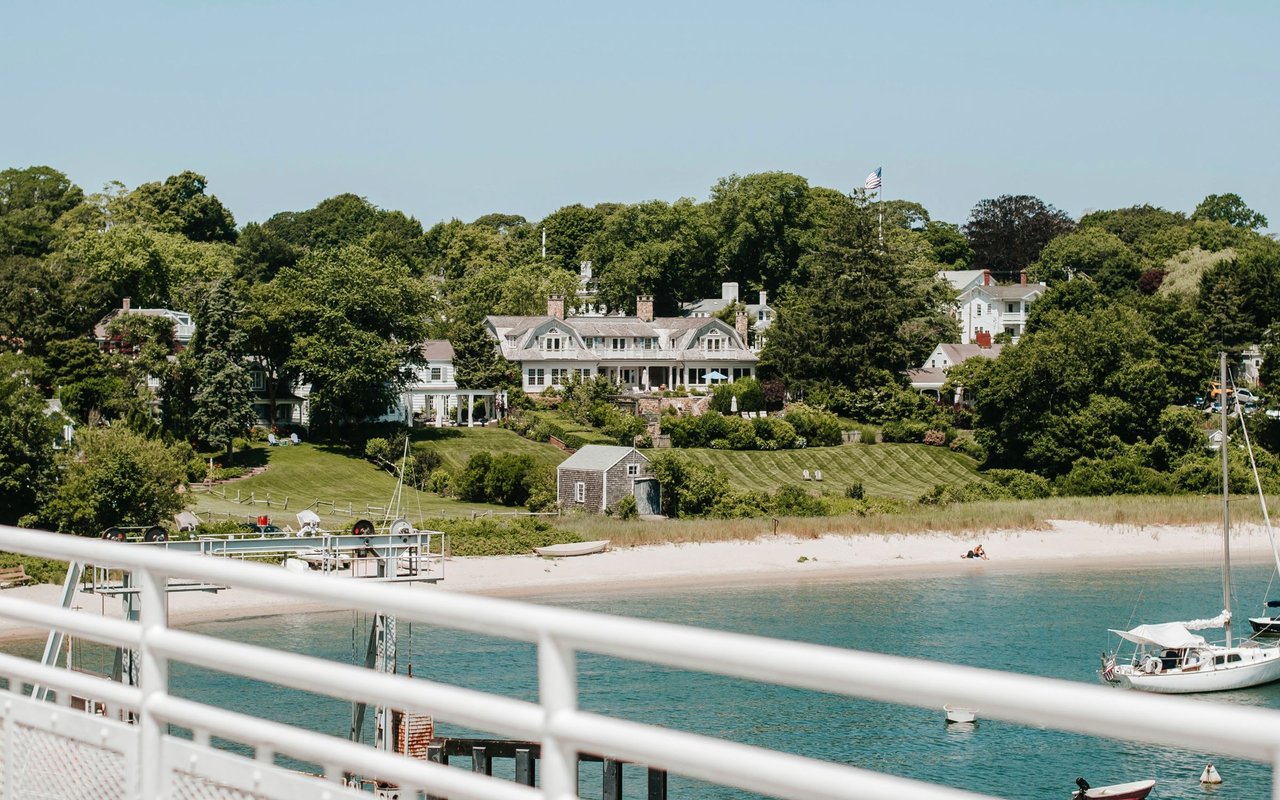
The Steamship Authority opened its new Woods Hole terminal to the public on June 25, 2026. The building cost about $37 million, ran 5,418 square feet, and took 21 months to construct once the contract was finally awarded to Colantonio Inc. of Holliston in the fall of 2024. That was the fast part. The slow part started more than a decade earlier, with a feasibility study in 2013, a 2018 demolition of the old 1950s-era terminal, and years of a temporary modular ticket building sitting where a real one used to be.
Along the way, an early design for a two-story terminal got scaled back to one floor after Falmouth residents pushed back over the building blocking harbor views. Construction backed up traffic on Woods Hole Road through multiple summers. Steamship Authority general manager Alex Kryska called the finished building "a climate-resilient, state-of-the-art facility for travelers, the public and our employees" when it opened, closing out a project that outlasted three different SSA general managers.
None of that stopped Woods Hole real estate from doing something the ferry lines never predicted.
Over the most recent 12-month window tracked at the village level, the median sale price for a home in Woods Hole sat around $1.5 million, up 3% from the year before. That number alone would suggest a fairly typical high-end coastal market. The average sale price over the same window tells a different story: roughly $2.8 million, nearly double the median.
A median and an average only pull that far apart when a small number of very large sales drag the mean upward while most transactions stay clustered much lower. In Woods Hole, that's exactly what's happening. Homes built in the early to mid-1900s typically sell in the $800,000 to $1 million range. Newer construction with historic detailing runs $1.7 million to $2.1 million. Then, occasionally, a multiacre estate on Penzance Point or along Buzzards Bay changes hands for $11 million to $13.5 million, and that single sale does more to move the average than a dozen ordinary ones.
The village doesn't produce many transactions to begin with. One recent snapshot counted just two houses for sale in Woods Hole at a given moment. A broader count that folds in condos put active listings at nine. When a market that thin includes even one estate-scale sale, the average stops representing anything a typical buyer will encounter.
That scarcity is tied to the village's identity more than its location. Woods Hole isn't a beach town in the way North Falmouth or Falmouth Heights are. It's built around the Woods Hole Oceanographic Institution and the Marine Biological Laboratory, and a meaningful share of its housing stock has stayed in the same families for generations rather than turning over on a normal resale cycle. The result is a market where days on market swing wildly from one reading to the next, from as fast as 29 days in one snapshot to as slow as 71 in another. That's not measurement error. It's what a thin market looks like when only a handful of homes trade in any given stretch.
East Falmouth is a different kind of market entirely, and the contrast is instructive. As of the most recent village-level breakdown available, from mid-2025, the median sale price there was $705,000, up 2.9% year over year. In the same window, price per square foot in East Falmouth actually fell about 10.6% from the year before, even as the median climbed. That split usually means the mix of what sold changed rather than values themselves moving in two directions at once, a reminder that a single median can move for reasons that have nothing to do with appreciation.
Here's the part that runs against intuition. A home costing a third of what Woods Hole asks should, in theory, move faster. It has a bigger buyer pool and fewer of the constraints that come with ultra-high price points. Instead, East Falmouth homes have recently taken anywhere from 46 to 66 days to sell, depending on the month, which is not meaningfully faster than Woods Hole and in some readings slower.
The explanation has less to do with price and more to do with what the village actually is. East Falmouth carries the town's broadest and most varied housing stock, a mix of ranches, capes, larger lots, and both waterfront and inland parcels, reflecting its history as Falmouth's agricultural area before it filled in with postwar development. That variety is an asset for buyers who want options. It's also why deals take longer to close: a wide range of house types and price points means more back-and-forth matching seller expectations to buyer priorities, compared to Woods Hole's narrow, specific pool of buyers who already know exactly what they're looking for and move fast when it appears.
When people picture "a house in Falmouth," they're usually picturing Falmouth Village, the in-town core near Surf Drive Beach and Falmouth Heights Beach, walkable to Main Street. Recent listing data for that specific village put the median around $1.4 million, with active listings ranging from about $1.26 million to nearly $4 million. It's the market most associated with the town's name and the one most different from both Woods Hole's estate-skewed extremes and East Falmouth's broader, slower-moving inventory.
The town-wide numbers that show up on national portals don't separate any of this out, and the sources themselves don't even agree with each other. For the three months ending in May 2026, one major tracker put Falmouth's town-wide median sale price at $794,000, up 7.3% from the year before, with the average sale taking 33 days. A separate home-value index for the same town and the same general period put the typical home value closer to $989,000. Those are two large data providers looking at the same town and landing nearly $200,000 apart, because one is measuring closed sales and the other is estimating value across the entire housing stock, including homes that haven't sold recently. Neither is wrong. They're just describing a town built from villages that don't behave alike, then compressing all of it into one figure.
| Village | Typical Price Point | What Actually Sets the Pace |
|---|---|---|
| Woods Hole | Median around $1.5M; average sale near $2.8M | A handful of Penzance Point-scale estate sales pull the average far above the median |
| Falmouth Village | Median around $1.4M; range roughly $1.26M to $4M | In-town walkability to Main Street and the Surf Drive/Falmouth Heights beaches |
| East Falmouth | Median around $705K | The widest mix of housing stock and typically the longest time to sell |
Even Falmouth's waterfront category, taken as a whole, spans an enormous range on its own. A recent count of 169 waterfront listings across the town showed a median list price near $995,000, a figure that includes everything from modest cottages on protected coves to the same Buzzards Bay estates that distort Woods Hole's average.
This is where the ferry terminal matters again. Woods Hole's median price climbed through two full years of active construction next to the village center, through community fights over building height, through traffic that backed up onto Woods Hole Road on summer weekends. None of that showed up as a discount. The village's small, generationally held housing stock kept selling to the same narrow pool of buyers tied to its institutions, disruption or not.
That's useful information for anyone evaluating Woods Hole against another village or another town entirely. The premium isn't primarily about the ferry, the harbor view, or the summer atmosphere, since all three were actively compromised for years while prices kept climbing anyway. It's about how few of these houses exist and how tightly they're held. Finishing the terminal removes a source of friction nobody was pricing in as a discount to begin with, so there's no obvious reason to expect it resets anything about how the village trades. The scarcity story was never really about the ferry line.
If you're weighing Falmouth against another South Coast or Cape town, the single median price you'll find on a national site is describing an average of these three markets, not a home you can actually walk into. The number that matters is which village is doing the pricing in a given month: Woods Hole's rare estate sale, Falmouth Village's in-town premium, or East Falmouth's deeper, more varied inventory. Our Falmouth neighborhood guide breaks down what each village actually offers, and our buyer's guide walks through how to compare towns on more than a headline figure.
If you're trying to figure out where your own numbers would land in a market like this, a real valuation beats a portal estimate every time. Erin Hovan can walk you through what a specific Falmouth village is actually doing right now and how your situation fits into it. Schedule a consultation to start that conversation.
Our team takes great pride in helping clients reach their real estate goals, consistently earning five-star reviews for our dedication and expertise. We serve as trusted advisors to individuals, families, and developers seeking the area’s most desirable properties.